Budget 2026 Tax Changes Explained: Key Dates You Need to Plan For
The Chancellor delivered Budget 2026 on 28 October 2026, and this guide explains the Budget 2026 tax changes for individuals, landlords, sole traders and company owners. Headline rates of income tax, National Insurance and VAT have not changed, but tax on rental and savings income goes up again, several reliefs and allowances change, and HMRC is getting new collection powers. Most changes start from April 2027, so there is time to plan, and the earlier you look at your position the more options you have.
By Dr. Mehmood Jamshed DBA, MSc, MBA – Tax Adviser & Business Consultant, My Tax Advisors And Accountants Ltd.
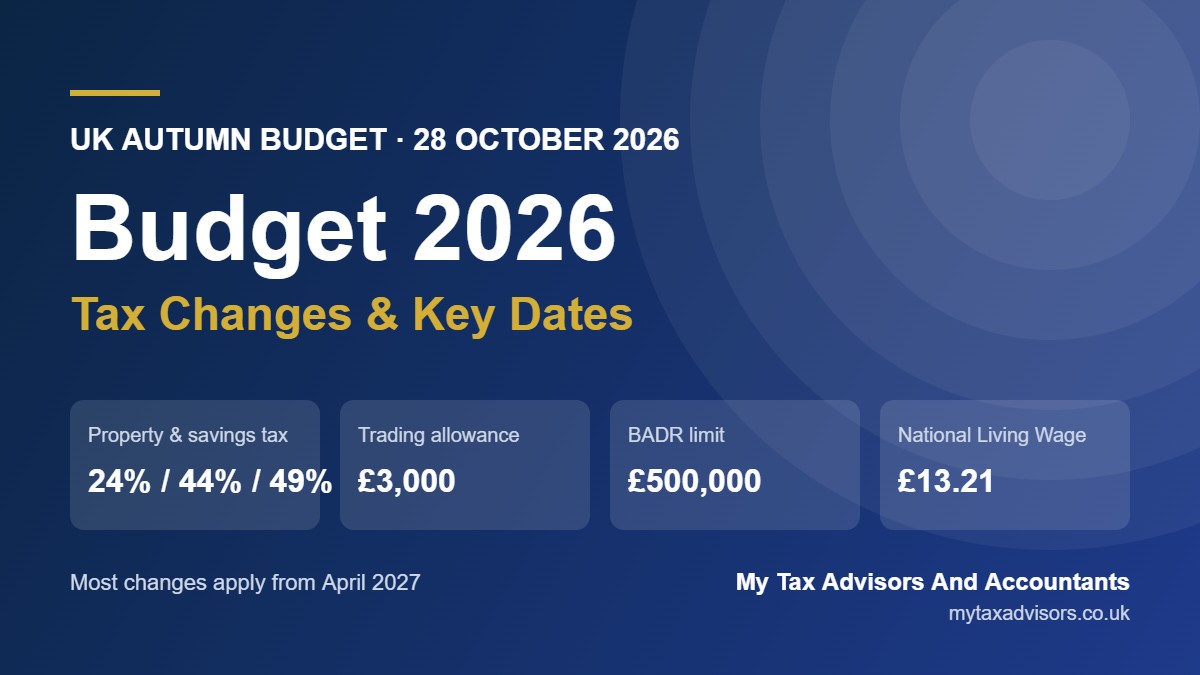
Budget 2026 Tax Changes at a Glance: Old Rules vs New Rules
| Area | Before | After Budget 2026 | From |
|---|---|---|---|
| Property income tax rates | 20% / 40% / 45% | 24% / 44% / 49% | 6 April 2027 |
| Savings income tax rates | 20% / 40% / 45% | 24% / 44% / 49% | 6 April 2027 |
| Trading allowance | £1,000 | £3,000 | 6 April 2027 |
| Business Asset Disposal Relief lifetime limit | £1,000,000 | £500,000 | Disposals on/after 6 April 2027 |
| Main-rate first-year allowance | 40% | 50% | Spending from 1 January 2027 |
| Main-rate writing-down allowance | 14% | 12% | 1 April 2027 (companies) / 6 April 2027 (individuals) |
| Mileage rate above 10,000 business miles | 25p | 35p (first 10,000 miles stays 55p) | 6 April 2027 |
| National Living Wage (21+) | £12.71 | £13.21 | 1 April 2027 |
| National Minimum Wage (18–20) | £10.85 | £11.27 | 1 April 2027 |
| Corporation tax | 25% main / 19% small profits | No change | – |
The 2025 Budget had already announced a 2 percentage point rise on property and savings income from April 2027; Budget 2026 adds a further 2 points from the same date. Scotland and Wales can set their own property income rates.
Budget 2026 Key Dates Timeline
- 30 November 2026: Consultation closes on the new Founders’ Relief.
- 1 January 2027: Main-rate first-year allowance rises to 50%.
- 1 April 2027: National Living Wage £13.21; writing-down allowance 12% for companies.
- 6 April 2027: Property and savings income at 24% / 44% / 49%; trading allowance £3,000; BADR limit £500,000; 35p mileage rate above 10,000 miles; Making Tax Digital for Income Tax extends to income over £30,000; payrolling of benefits in kind becomes mandatory.
- 1 May 2027: VAT exemption for supplying a deputy for a registered medical practitioner is removed.
- October 2027: Online marketplaces start collecting VAT for UK sellers with over £90,000 of sales per platform.
- April 2028: High Value Council Tax Surcharge on homes worth £2 million or more; reform of tax on company distributions to individuals; Making Tax Digital extends to income over £20,000.
- April 2029: More regular, automated Self Assessment payments for people on payments on account; salary-sacrificed pension contributions above £2,000 a year lose their NI exemption.
- 2029–30: HMRC expected to start recovering lower-value debts directly from bank accounts where people repeatedly fail to engage.
What the Budget 2026 Tax Changes Mean for You
Individuals and Employees
- Frozen thresholds: The personal allowance (£12,570), higher rate threshold (£50,270) and additional rate threshold (£125,140) stay frozen until 2031, so more of any pay rise is taxed.
- Savings: Interest above your personal savings allowance will be taxed at 24%, 44% or 49% from April 2027. The cash ISA limit stays at £20,000 a year, so using your ISA allowance becomes more valuable.
- Employment expenses: Around 160,000 employees will be able to claim employment expenses without having to register for Self Assessment just to make the claim.
- Pensioners: A new Pension Tax Allowance from April 2027 is designed to stop people whose income is only just above the personal allowance being pulled into tax by State Pension increases.
Landlords and Property Investors
- Higher tax on rent: From 6 April 2027, rental profits held in your own name are taxed at 24% (basic), 44% (higher) or 49% (additional). This includes rent-to-rent and serviced accommodation run as an individual or partnership.
- Finance costs: Mortgage interest relief remains restricted to a tax credit at the property basic rate.
- Making Tax Digital: If your gross property and self-employment income is over £30,000, quarterly digital updates start from April 2027 (over £20,000 from April 2028). See our Making Tax Digital for Income Tax guide.
- High-value homes: A council tax surcharge applies to residential properties worth £2 million or more from April 2028.
- Planning point: Compare the after-tax return of each property at the new rates, and take advice before moving property into a company, as stamp duty and capital gains tax can apply on transfer. Our property tax advisers can model this for you, and you can read more on the existing Section 24 mortgage interest restriction.
Sole Traders, Partnerships and Side Businesses
- Trading allowance £3,000: From 6 April 2027, gross trading income up to £3,000 is tax-free, and the Self Assessment reporting threshold for trading income moves to £3,000.
- Capital allowances: The main-rate writing-down allowance falls to 12% from 6 April 2027, while the 50% first-year allowance applies to qualifying main-rate spending from 1 January 2027.
- Mileage: Simplified expenses for business mileage above 10,000 miles rise from 25p to 35p per mile from 6 April 2027.
- Self Assessment payments: From April 2029, if you make payments on account you will move to smaller, more regular automated payments, with the option to pay through PAYE if eligible. We can help with your Self Assessment tax return and sole trader accounts.
- Carers: People eligible for qualifying care relief are exempt from Making Tax Digital for Income Tax until further notice.
Limited Companies and Directors
- Corporation tax: The main rate stays at 25% and the small profits rate at 19%.
- Capital allowances: First-year allowance of 50% on main-rate assets from 1 January 2027; writing-down allowance 12% from 1 April 2027. Full expensing for companies continues.
- Selling your business: The Business Asset Disposal Relief lifetime limit halves to £500,000 for disposals on or after 6 April 2027. A new Founders’ Relief with a lower capital gains tax rate for qualifying share disposals is planned from 6 April 2027 – the rate and conditions are still being consulted on. Read our guide to Capital Gains Tax.
- Paying yourself: Dividend rates are 10.75%, 35.75% and 39.35% from April 2026. The rules on company distributions to individual shareholders will be reformed from April 2028 (draft legislation to be consulted on).
- Employers: Employer NI rates are unchanged, but wage costs rise with the National Living Wage at £13.21 from 1 April 2027. Benefits in kind must be payrolled from April 2027.
Online Sellers and E-commerce Businesses
- From October 2027, online marketplaces will have to collect and pay VAT on sales made by UK sellers with more than £90,000 of annual sales on that platform. Personal sales, second-hand goods and business-to-business sales are excluded.
- Check your sales per platform now and make sure your bookkeeping can separate marketplace-collected VAT from VAT you account for yourself. Our eCommerce accountants work with Amazon, eBay and Shopify sellers.
Retail, Hospitality and Leisure
- The Small Business Rate Relief threshold is increasing, taking around 70,000 more retail, hospitality and leisure businesses out of business rates altogether.
- Pubs, music venues and social clubs get an extra 20% reduction, and other retail, hospitality and leisure properties have rates frozen for two years from April 2027.
Healthcare Providers
- From 1 May 2027 the VAT exemption for supplying a deputy for a registered medical practitioner is removed. Deputising services that mainly provide medical care stay exempt, so check how your contracts are structured.
What Has Not Changed
- Headline rates of income tax on earnings, National Insurance and VAT.
- Employer National Insurance rates.
- IR35 (off-payroll working), umbrella company rules and the Construction Industry Scheme.
- Stamp Duty Land Tax.
- The VAT registration threshold.
Your Budget 2026 Action Checklist
- ☑ Landlords: review rental profits and ownership structure before 6 April 2027.
- ☑ Sellers of a business: if a sale is close, consider the timing against the 6 April 2027 BADR change.
- ☑ Sole traders and landlords over £30,000: get Making Tax Digital-compatible software in place for April 2027.
- ☑ Employers: budget for the National Living Wage increase and prepare payroll for benefits in kind.
- ☑ Companies planning equipment purchases: consider timing around the 50% first-year allowance from 1 January 2027.
- ☑ Savers: use your ISA allowance before savings tax rates rise.
- ☑ Everyone: keep HMRC correspondence up to date – HMRC compliance resources and collection powers are increasing.
Frequently Asked Questions
Do the higher property tax rates apply to my limited company?
No. The 24% / 44% / 49% property income rates apply to individuals (including partners). Companies pay corporation tax on rental profits at 19% to 25%, but extracting profits through dividends is taxed separately, so the right structure depends on your circumstances.
When do I first pay the new rates?
They apply to income from 6 April 2027, so the 2027–28 tax year is the first affected. The tax is due by 31 January 2029, with payments on account possibly earlier.
Is Founders’ Relief confirmed?
The Government has confirmed a new lower capital gains tax rate for qualifying founders from 6 April 2027, but the final rate and conditions depend on the consultation closing on 30 November 2026.
Will HMRC take money from my bank account?
The Government plans future legislation, expected from 2029–30, allowing HMRC to recover established lower-value tax debts by regular deductions from bank accounts where people repeatedly fail to engage. It is not in force yet.
Speak to a Tax Adviser About Budget 2026
Every client’s position is different. If you would like us to work out how Budget 2026 affects your tax bill, your property portfolio or your company, call us on 020 3143 5869 or email hello@mytaxadvisors.co.uk.
This article is general information about UK tax based on the Budget 2026 documents published by HM Treasury on 28 October 2026. It is not personal advice. Several measures are subject to consultation and legislation, so details may change. Please speak to us before acting. For last year’s measures, see our Budget 2025 summary.
Sources: GOV.UK – Budget 2026; GOV.UK – Budget 2026 Overview of Tax Legislation and Rates.